

How to Choose Velvet Fabric for Aso Ebi: Complete Guide
How to Choose the Perfect Velvet Fabric for Aso Ebi: A Complete Guide for Nigerian Women
Velvet has a way of making an outfit stand out. Its rich surface, soft texture and distinctive appearance make it an attractive choice for Nigerian weddings, traditional celebrations, birthdays and other special occasions.
But choosing velvet is not just about picking a beautiful colour.
Two velvet fabrics can look completely different when sewn into an outfit. One may have a rich, smooth finish, while another may have a more textured appearance. Some are suitable for structured gowns, while others work better for softer designs.
If you are considering velvet for your next aso ebi outfit, here are the things you should know before making a purchase.
1. Understand the Type of Velvet You Are Buying
Velvet is recognised by its soft, raised surface, commonly known as its pile. However, velvet fabrics come in different finishes and constructions.
Depending on the design, you may come across:
- Plain velvet: A relatively simple velvet surface without prominent decorative patterns.
- Crushed velvet: Has an irregular, textured appearance created by the way the pile is pressed.
- Stretch velvet: Contains stretch, depending on its fibre composition, and may be suitable for certain fitted designs.
- Embellished velvet: Features additional decorative details such as embroidery, sequins or other embellishments.
- Velvet lace designs: Fabrics sold under this description may combine velvet-like textures with lace patterns or decorative elements.
Always examine the actual fabric rather than relying on its name alone. The texture, backing, weight and finish matter when deciding what to sew.
2. Pay Attention to the Fabric’s Texture and Finish
One of the most important things to examine when buying velvet is its surface.
Does it look smooth? Does it have a noticeable sheen? Is the pile evenly distributed? Does the fabric have raised patterns or decorative details?
These small differences can influence the final appearance of your outfit.
For example, a smooth velvet finish may create a clean, elegant appearance, while a textured or embellished design can make a stronger fashion statement.
Run your hand gently over the surface and observe how the appearance changes when the fabric is viewed from different directions.
3. Choose a Colour That Suits Your Occasion
Colour plays a major role when selecting velvet for aso ebi.
Some shades create a rich, dramatic appearance, while others offer a softer and more understated look.
Here are some colours worth considering:
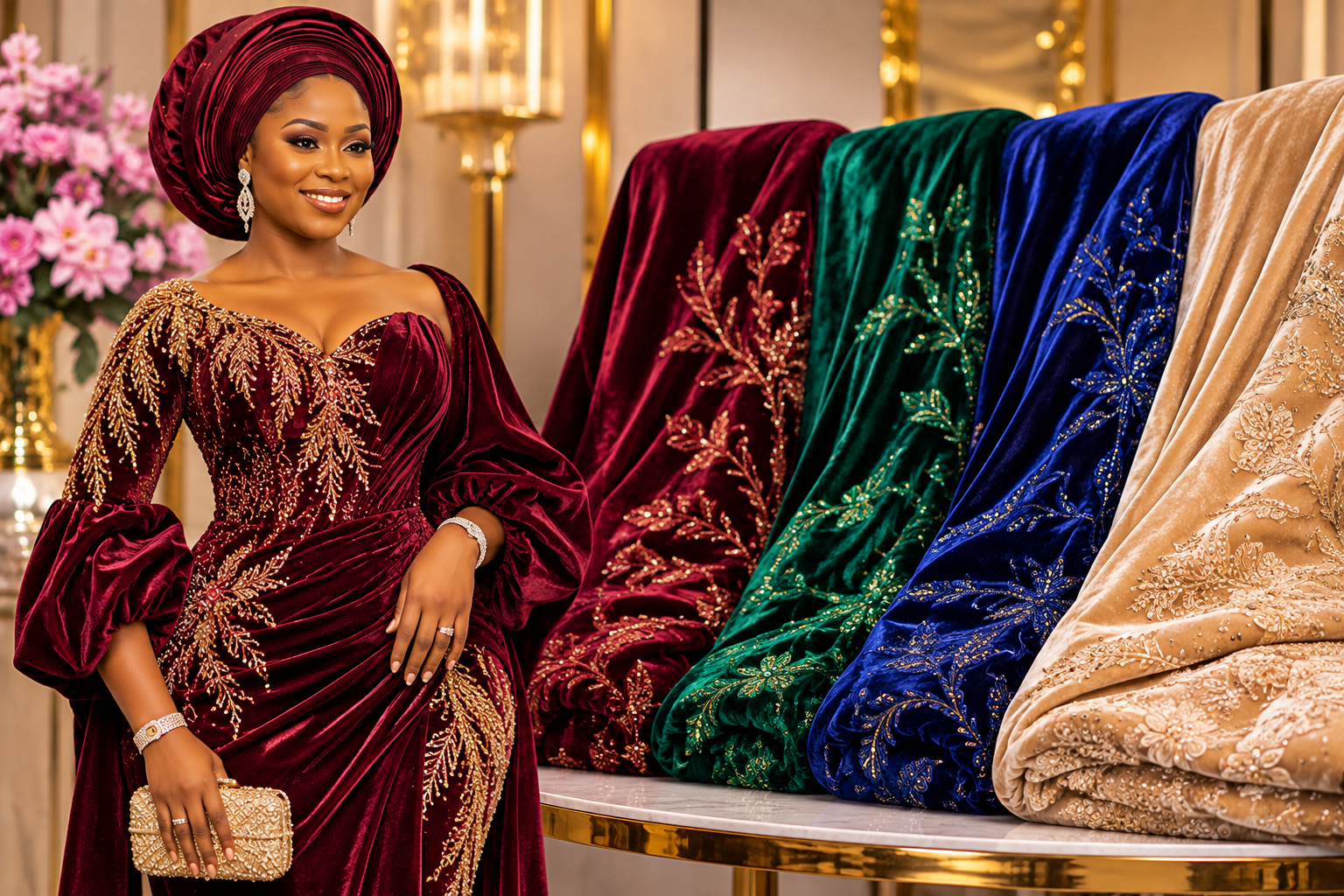
Wine and burgundy: Beautiful options for evening weddings, traditional celebrations and statement outfits.
Emerald green: A striking colour for women who enjoy bold traditional fashion.
Royal blue: A strong choice for coordinated wedding outfits and celebratory occasions.
Champagne and gold: Suitable for elegant celebrations where a softer, refined appearance is desired.
Chocolate brown: An interesting alternative to conventional dark colours.
Black: A timeless option that can be styled with contrasting accessories or decorative details.
Before purchasing, check the colour under natural daylight and indoor lighting. Velvet can reflect light differently depending on its surface and pile direction.
4. Consider the Weight of the Velvet
This is particularly important when choosing velvet for a fitted gown or a flowing traditional outfit.
Some velvet fabrics are heavier than others. A heavier material may create a fuller appearance, while a lighter option may be easier to arrange into certain designs.
The weight of the fabric can influence:
- How the outfit falls.
- How comfortable it feels.
- Whether it works for a flowing or structured design.
- How much fabric your tailor needs to handle.
- The overall appearance of the finished garment.
Do not assume that a heavier velvet is automatically better. The right choice depends on the style you intend to sew.
5. Think About the Outfit Before Buying the Fabric
One common mistake is purchasing a fabric first and only thinking about the design afterwards.
Although this can work, it is better to have an idea of your preferred outfit before making your final decision.
Velvet can be used for different styles, including:
- Fitted mermaid gowns.
- Corset gowns.
- Straight-cut traditional dresses.
- Elegant boubou designs.
- Two-piece traditional outfits.
- Statement sleeves and decorative panels.
However, not every velvet fabric will behave the same way when cut and sewn.
Take a picture of your preferred design to your tailor and ask whether the particular velvet you want to buy is suitable.
6. Can Velvet Be Combined with Lace?
Absolutely.
Velvet and lace can create an interesting contrast because they offer different textures.
For example, a velvet gown can feature lace sleeves, lace panels or decorative lace around the neckline.
Another option is to use a velvet bodice with a lace skirt, depending on the construction and desired appearance.
You can also explore velvet lace fabrics that already incorporate decorative patterns, reducing the need to introduce too many additional materials.
The secret is to create balance. If the velvet already has prominent details, avoid adding too many competing embellishments.
7. How Much Velvet Should You Buy for Your Outfit?
The quantity depends on several factors:
- Your preferred outfit design.
- Your measurements.
- Your height.
- The width of the fabric.
- Whether the outfit has long sleeves.
- Whether it includes a train, cape or additional panels.
A fitted gown may require a different quantity from a flowing boubou or a dramatic mermaid design.
Rather than buying based on another person’s measurements or outfit, take your design to your tailor and confirm the required quantity before purchasing.
This helps you avoid buying too little or spending money on unnecessary extra fabric.
8. How to Care for Your Velvet Outfit
Velvet requires thoughtful handling because its surface texture can be affected by improper cleaning and storage.
Here are some useful precautions:
- Check the fabric’s care instructions before washing.
- Avoid applying direct heat to the velvet surface.
- Do not press heavily with a hot iron.
- Follow the recommended cleaning method for the particular fabric.
- Store the outfit in a clean, dry place.
- Avoid crushing or tightly folding the garment for long periods.
For valuable or heavily embellished velvet outfits, professional cleaning may be the safer option.
9. Where Can You Find Velvet Fabric for Aso Ebi?
Once you have settled on your preferred design, the next step is finding a fabric that matches your expectations.
At Subtle Fabrics, you can explore velvet options for traditional outfits, wedding celebrations and special occasions.
One option to check out is our Premium Velvet Lace Fabric V1917, which offers another way to incorporate velvet into your aso ebi wardrobe.
When shopping, pay attention to the actual design, colour and fabric finish so you can select an option that works with your preferred outfit.
Explore the Subtle Fabrics velvet collection and find inspiration for your next traditional look.
Final Thoughts
Choosing velvet for aso ebi should involve more than selecting a beautiful colour.
Consider the texture, weight, finish, outfit design and the occasion you are dressing for. These details can make a significant difference to the final result.
Whether you prefer a fitted velvet gown, an elegant boubou or a velvet-and-lace combination, the right fabric is the foundation of a beautiful outfit.
Take your time, consult your tailor and choose a velvet fabric that brings your desired style to life.


