

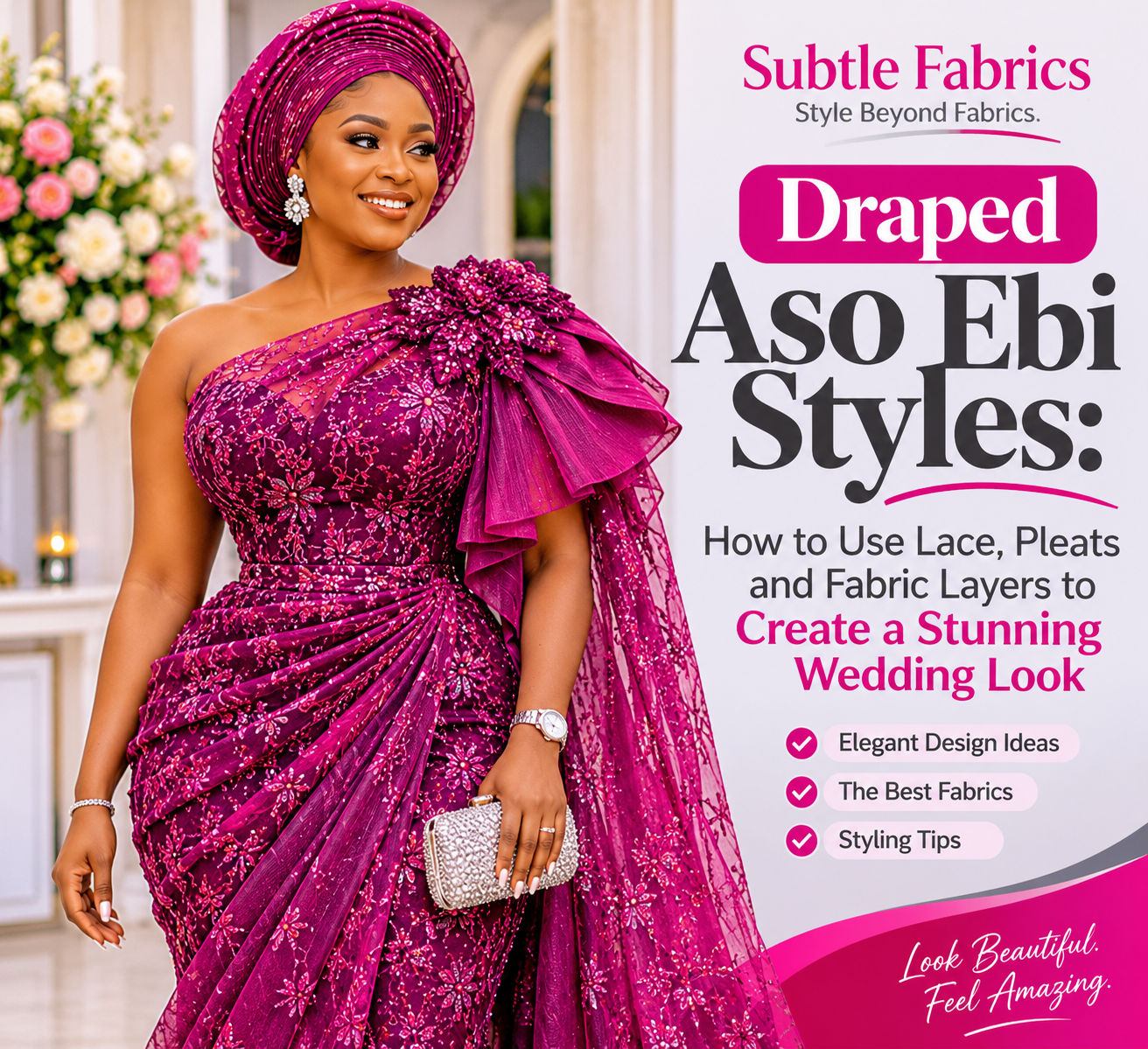
Draped Aso Ebi Styles: 6 Elegant Designs to Try in 2026
Draped Aso Ebi Styles: How to Use Lace, Pleats and Fabric Layers to Create a Stunning Wedding Look
Have you noticed how some aso ebi outfits look effortlessly elegant, even without excessive beads, stones or elaborate embellishments?
Sometimes, the secret is not the amount of decoration on the outfit but how the fabric is arranged.
Draping, pleating and layering are becoming increasingly interesting ways to transform ordinary fabric into beautiful statement outfits. From softly gathered waistlines to flowing sleeves and dramatic shoulder details, these techniques add dimension, movement and personality to occasion wear.
If you’re looking for a way to make your next aso ebi outfit stand out, here is everything you need to know about draped designs and the fabrics that bring them to life.
What Are Draped Aso Ebi Styles?
Draping is a garment-making technique that involves arranging and folding fabric over the body to create soft gathers, flowing folds and structured shapes.
Unlike conventional designs that rely heavily on embroidery or embellishments, draped outfits use the arrangement of the fabric itself to create visual interest.
Depending on the desired look, draping can be subtle and understated or bold and dramatic.
It is particularly beautiful for wedding guest outfits because it adds sophistication without necessarily making the outfit look overly busy.
6 Beautiful Ways to Incorporate Draping Into Your Aso Ebi Outfit
1. Asymmetrical Shoulder Draping
One shoulder can become the centre of attention with beautifully arranged fabric folds.
This design works particularly well for women who want an elegant outfit with a modern touch. A flowing draped sleeve or shoulder detail can add volume and movement without overwhelming the entire outfit.
2. Draped Waistlines
A gathered or draped waistline can introduce softness and dimension to a fitted gown.
The fabric is arranged around the waist or hip area to create cascading folds, giving the outfit a more interesting silhouette.
This technique can be used on mermaid gowns, fitted dresses and other occasion wear designs.
3. Pleated Aso Ebi Gowns
Pleating involves folding fabric into repeated sections to create texture and structure.
Depending on the type of pleats and fabric used, the result can be delicate, structured or dramatic.
Pleated skirts, sleeves and bodice details can make an otherwise simple lace outfit look much more elaborate.
4. Draped Sleeves
If you want to make a statement without adding too many accessories, consider draped sleeves.
From flowing bishop sleeves to oversized fabric folds around the shoulders, this design adds movement and elegance.
It is particularly attractive when paired with a fitted bodice or a simple skirt.
5. Layered Lace and Tulle Designs
Combining different fabric layers is another way to create depth and dimension.
For example, lace can be used for the bodice while soft tulle creates a flowing skirt or dramatic sleeve.
The combination of textures makes the outfit visually interesting without requiring excessive decoration.
6. Cascading Fabric Details
Cascading folds create the appearance of fabric flowing naturally from one section of the outfit to another.
This can be incorporated around the waist, hips, shoulders or back of a gown.
It is a beautiful option for women who want an outfit that feels dramatic and elegant at the same time.
Which Fabrics Work Best for Draped Aso Ebi Styles?
This is where fabric selection becomes particularly important.
Not every fabric produces the same result when draped. Some are naturally soft and flowing, while others are firmer and better suited to structured designs.
Here are some fabrics worth considering.
1. Chantilly Lace
Chantilly lace is known for its delicate appearance and intricate patterns.
Its lightweight nature makes it suitable for certain flowing designs, layered details and soft sleeves.
Depending on its construction and the support added during sewing, it can create a beautifully delicate finish.
2. Soft Net Lace
Net lace can be used to create beautiful layered effects, gathered sleeves and flowing details.
Its versatility makes it an interesting option for designers who want to introduce texture and volume into an outfit.
The weight of the embellishments should be considered before using heavily decorated net lace for extensive draping.
3. Organza
Organza is a lightweight, sheer fabric with a crisp texture.
Unlike softer fabrics that fall naturally, organza can hold its shape, making it useful for sculptural folds, dramatic sleeves and structured layers.
It is particularly effective when you want the draping to maintain a defined shape.
4. Tulle
Tulle is popular for creating soft layers, volume and delicate details.
It can be incorporated into skirts, sleeves and overlays to give an outfit a dreamy, flowing appearance.
5. Satin
Satin has a smooth surface and beautiful drape, making it suitable for gathered waistlines, cascading folds and flowing skirts.
It can also be paired with lace to create an interesting contrast between textures.
Draping vs Pleating: What Is the Difference?
Although both techniques involve arranging fabric, they produce different results.
| Draping | Pleating |
|---|---|
| Creates flowing or gathered folds | Creates repeated folded sections |
| Can look soft and relaxed | Can look structured and defined |
| Folds may be irregular or asymmetrical | Folds are often more uniform |
| Often creates movement | Often creates texture and volume |
Both techniques can also be combined in one outfit for a more elaborate design.
5 Things to Consider Before Choosing Fabric for a Draped Outfit
Before purchasing fabric for a draped aso ebi design, keep these points in mind.
1. Consider the fabric weight: Heavy fabrics may not fall as softly as lightweight ones. They may also require additional support.
2. Think about the desired effect: Do you want soft, flowing folds or dramatic, sculptural shapes? Your answer will influence the fabric you choose.
3. Pay attention to embellishments: Beads, stones and sequins can increase the weight of a fabric and affect how it hangs.
4. Discuss your design with your tailor: Some draped designs require more fabric than conventional outfits. Confirm the estimated yardage before purchasing.
5. Consider comfort: Remember that you will be wearing the outfit for several hours. Choose a fabric and design that allow you to enjoy the celebration comfortably.
Final Thoughts
A beautiful aso ebi outfit does not always need excessive embellishments to stand out.
Sometimes, the way a fabric is folded, layered and arranged is enough to create a memorable look.
Whether you prefer soft Chantilly lace, flowing net, structured organza or elegant satin, the right fabric can help bring your desired design to life.
So, before choosing your next aso ebi fabric, think beyond the colour and pattern. Consider the silhouette, texture and overall effect you want to achieve.
At Subtle Fabrics, we believe every beautiful outfit begins with choosing the right fabric.
Explore our collection and find the perfect material for your next occasion.
Subtle Fabrics – Style Beyond Fabrics.

