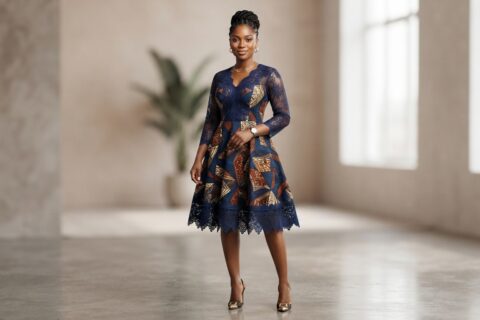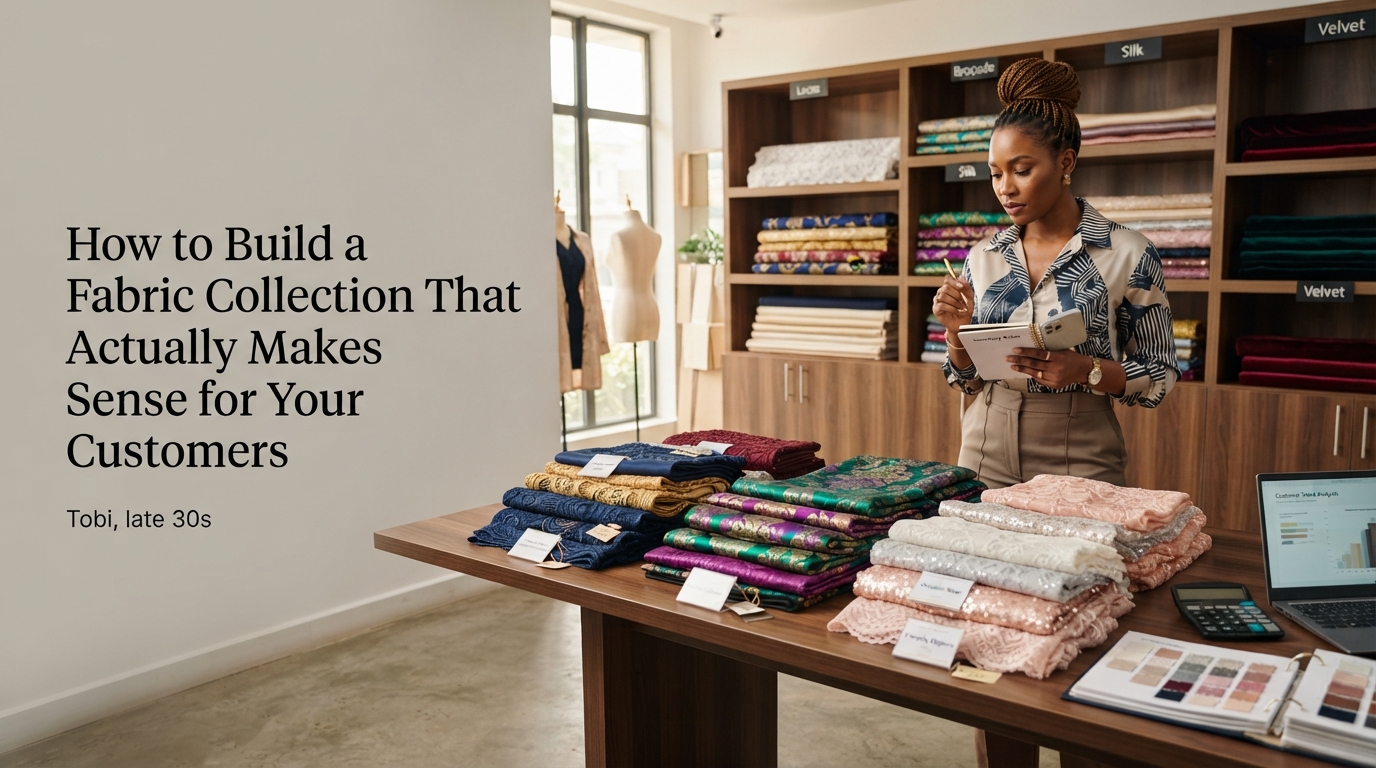
How to Build a Fabric Collection That Sells | Fabric Business Guide
How to Build a Fabric Collection That Actually Makes Sense for Your Customers
Introduction
Walking into a fabric market and seeing hundreds of beautiful fabrics can make one thing very tempting: buy everything you like.
But a successful fabric business is not built by simply filling a shop with beautiful materials.
It is built by creating a fabric collection that makes sense for the people you are selling to.
Your customers should be able to find different options without feeling like they are looking at the same fabric in twenty different versions. You should also be able to manage your stock without having too much money tied up in products that barely move.
So, how do you build a fabric collection that works?
You need to think about customer type, price, colour, fabric category, occasion, quality, variety and demand.
This guide explains how to build a balanced fabric collection that gives your customers choices while keeping your inventory commercially sensible.
What Is a Fabric Collection?
A fabric collection is the group of fabrics you intentionally select to offer your customers.
It can include different:
- Fabric types
- Colours
- Designs
- Textures
- Price points
- Embellishments
- Styles
- Quality levels
A collection is different from simply having a large amount of stock.
You could have 100 different fabrics and still have a poorly planned collection.
A well-planned collection is one where the products work together to serve different customer needs.
1. Start With Your Customer, Not the Fabric
The first question should not be:
“What fabric do I want to buy?”
It should be:
“Who am I buying for?”
Think about your actual customer.
Are you mainly serving:
- Asoebi buyers?
- Brides?
- Fashion designers?
- Tailors?
- Resellers?
- Young professionals?
- Families?
- Customers shopping for special occasions?
- Customers looking for affordable options?
- Customers looking for premium fabrics?
Your answer should influence almost everything in your collection.
For example, a business serving customers who regularly attend weddings may need a very different collection from one serving customers looking mainly for everyday clothing.
2. Build Around Your Proven Sellers
Your existing sales should be the foundation of your collection.
Look at the fabrics that consistently sell.
These products have already given you evidence that there is demand for them.
Instead of constantly replacing successful products with new ones, build around them.
Your collection can then have:
Core products — fabrics that consistently sell.
Supporting products — fabrics that complement your core products.
New arrivals — products you are testing.
Seasonal products — fabrics suited to particular occasions or periods.
This creates structure instead of randomness.
3. Offer Variety Without Creating Confusion
Customers want options.
But too many similar options can create another problem: decision fatigue.
Imagine displaying fifteen fabrics that are almost the same shade, have similar patterns and sit within the same price range.
You may have created variety on paper, but to the customer, they may all look like one big choice.
Instead, create meaningful differences.
Vary your collection by:
- Colour
- Pattern
- Texture
- Embellishment
- Price
- Occasion
- Fabric type
This makes your collection feel broader without requiring unnecessary quantities.
4. Create Different Price Levels
Not every customer has the same budget.
A practical fabric collection should therefore have options at different price points.
You can think of your inventory as having three broad levels:
Accessible
Products for customers who want something attractive without spending heavily.
Mid-range
Products that offer a balance between price, design and quality.
Premium
More distinctive fabrics for customers willing to spend more.
This approach allows a customer who walks into your store with one budget to still find something suitable.
It also means you are not depending entirely on one type of buyer.
5. Don’t Build Your Collection Around One Colour
Colour preferences can change.
That does not mean you should ignore popular colours. It means you should avoid putting too much of your capital into one colour simply because it is currently popular.
A balanced collection can contain:
Reliable colours that customers regularly request.
Seasonal colours that perform better at particular times.
Emerging colours that you are testing.
Neutral options that are useful across different occasions and styling preferences.
This gives customers choice while reducing your exposure to one colour trend.
6. Stock Different Fabric Categories With a Purpose
You do not need every type of fabric available in the market.
Choose categories based on your customer demand and business model.
For example, a collection may include categories such as:
Lace for occasion wear and asoebi.
Brocade for customers looking for structured or traditional styles.
Cord lace for customers interested in detailed and embellished designs.
Velvet for customers looking for texture and richer styling options.
Voile for lighter outfit ideas.
Damask for customers looking for classic or traditional fabrics.
The important thing is not the number of categories.
It is whether each category has a clear purpose within your collection.
7. Think About Occasions
Fabric purchases are often connected to events.
Your customers may be shopping for:
- Weddings
- Birthdays
- Religious celebrations
- Traditional ceremonies
- Graduation events
- Family gatherings
- Festive occasions
Build your collection with these occasions in mind.
A customer preparing for a wedding may be looking for something completely different from someone looking for fabric for a simple weekend outfit.
When you understand the occasions your customers shop for, you can stock more intentionally.
8. Make Room for Different Style Preferences
Not every customer wants the same look.
Some customers prefer:
Simple and elegant
Others want:
Bold and dramatic
Some prefer:
Heavy embellishment
Others prefer:
Minimal detailing
Some want:
Traditional patterns
Others want:
Modern designs
Your collection should give customers room to express different preferences.
You do not need to stock endless designs.
You simply need enough variety to avoid making your entire collection feel like it was designed for one person.
9. Consider Fabric Quality Alongside Price
A collection should not simply be divided by cheap, medium and expensive fabrics.
Quality matters too.
Two fabrics may have similar prices but feel completely different when the customer handles them.
Pay attention to:
- Texture
- Weight
- Finish
- Embroidery
- Sequins
- Colour consistency
- Durability
- Construction
Your customers will build an expectation around your business based on the quality of fabrics you consistently provide.
That makes quality control an important part of collection building.
10. Don’t Let New Arrivals Take Over Your Whole Store
New fabrics are exciting.
You want to show customers that there is always something fresh to discover.
But new arrivals should not completely replace your proven sellers.
A healthy collection should have a balance between:
What already works
and
What you are testing.
Your best sellers provide stability.
New products create opportunities for growth.
You need both.
11. Use Customer Feedback to Improve the Collection
Your collection should change based on what your customers tell you.
Pay attention to questions such as:
“Do you have this in another colour?”
“Do you have something cheaper?”
“Do you have something more detailed?”
“Do you have this fabric in a lighter version?”
These questions can reveal gaps in your collection.
For example, if customers repeatedly ask for the same category you don’t carry, that may be a sign worth investigating.
Likewise, if certain products consistently receive little attention, you may need to rethink how much space or capital you dedicate to them.
12. Use Sales Data, Not Just Opinions
Customer feedback is useful, but actual sales are even more informative.
Track:
- Units sold
- Revenue by fabric category
- Best-selling colours
- Average selling price
- Repeat purchases
- Slow-moving products
- Seasonal changes
After a few months, you should be able to see patterns.
Your data may reveal that one category is consistently strong while another takes much longer to move.
That information can guide your next purchase.
13. Avoid Buying Too Many Similar Designs
One common mistake is confusing quantity with variety.
You may have twenty designs, but if seventeen of them appeal to exactly the same customer and price range, your collection is not necessarily balanced.
Before adding another similar fabric, ask:
“What does this product add to my collection?”
Does it give customers:
- A new colour?
- A new price point?
- A different texture?
- A different style?
- A different occasion?
- A different quality level?
If the answer is no, you may not need it.
14. Consider How the Collection Looks Online
Your collection should make sense not only in a physical shop but also online.
Customers shopping through your website, Instagram or WhatsApp cannot always touch the fabric.
That means your collection needs clear presentation.
Organise products by:
- Fabric category
- Colour
- Price range
- Occasion
- New arrivals
- Best sellers
Clear organisation helps customers find what they want faster.
A good collection that is poorly organised online can still feel difficult to shop.
15. Don’t Forget Stock Depth
There is a difference between how many different products you carry and how much of each product you carry.
You might want a broad collection, but you also need enough quantity of your strongest sellers.
For example, it may make more sense to have a smaller number of reliable designs with healthy stock levels than hundreds of designs with tiny quantities that are difficult to manage.
Your purchasing budget should therefore be split between:
Breadth — how many different products you offer.
Depth — how much stock you carry of each product.
Finding the right balance is one of the most important parts of inventory planning.
16. Create a Collection Review Routine
Your collection should not stay the same forever.
Review it regularly.
Ask:
What sold?
What didn’t sell?
What did customers ask for?
Which colours performed well?
Which products need better marketing?
Which products should be reordered?
Which products should be reduced or cleared?
This turns your collection into a living part of your business rather than a one-time buying decision.
A Simple Fabric Collection Framework
A beginner can keep things simple by dividing the collection into four groups:
1. Reliable Sellers
Products with proven demand.
2. Everyday Choices
Fabrics suitable for a wider range of customers and occasions.
3. Premium or Statement Pieces
Distinctive fabrics that give customers something special to consider.
4. Experimental or Trend Pieces
New products bought in controlled quantities to test demand.
This structure gives you room to experiment without allowing experimentation to consume your whole budget.
Questions to Ask Before Adding a New Fabric
Before purchasing another design, ask:
Who is this for?
What problem does it solve for my customer?
What price range does it fit into?
What occasion could someone buy it for?
Is it different from what I already have?
Is there evidence that customers want it?
How much should I buy?
Can I restock it if it sells quickly?
What is my expected profit?
If you cannot answer these questions, pause before placing the order.
Common Mistakes When Building a Fabric Collection
Buying What You Personally Like
Personal taste is useful, but it should not replace market knowledge.
Chasing Every Trend
Not every viral product deserves a place in your inventory.
Having Too Many Similar Products
More designs do not automatically mean better selection.
Ignoring Your Best Sellers
Your reliable products should remain an important part of your collection.
Buying More Than Your Cash Flow Can Support
Inventory should not consume money your business needs for other essential expenses.
Forgetting to Review Your Collection
What worked last season may not perform the same way forever.
Final Thoughts
Building a fabric collection is not about having the biggest selection.
It is about having the right selection.
A good collection gives customers enough variety to find something suitable while allowing your business to manage its money and inventory intelligently.
Start with your customer.
Build around proven sellers.
Create different price points.
Offer useful colour and style variety.
Test new products carefully.
Track what sells.
Then allow your collection to evolve as your customers and the market change.
The best fabric collection is not necessarily the one with the most designs.
It is the one where every major part of the collection has a reason to be there.
At Subtle Fabrics, we understand that fabric shopping is about choice, but good choice starts with having a well-curated selection. From lace and cord lace to brocade, velvet, voile, damask and other asoebi fabrics, the right collection should give customers options while making sense for their different styles, occasions and budgets.
Whether you are opening your first fabric business or refining an existing inventory, build your collection around your customer—not just what catches your eye.
Frequently Asked Questions
How do I build a fabric collection for my business?
Start by identifying your target customers and their purchasing habits. Then build a balanced selection around proven sellers, different price points, colours, fabric categories, occasions and new products you can test.
How many different fabrics should a beginner stock?
There is no universal number. Your available capital, customer base, selling channel and business model should determine the size of your collection. It is generally more useful to have a manageable, well-planned selection than a large collection that ties up too much capital.
Should I stock different colours of the same fabric?
Yes, where there is customer demand. However, avoid putting too much money into several colours that appeal to the same small customer segment.
How often should I change my fabric collection?
Review your collection regularly rather than waiting for a specific date. Look at your sales, customer enquiries, seasonal demand and slow-moving products to decide what should stay, increase, decrease or be replaced.
Should I focus on trending fabrics or best sellers?
A balanced collection can include both. Proven sellers provide stability, while a controlled amount of new or trending stock gives you opportunities to test changing customer preferences.
How can I prevent my fabric collection from becoming too expensive?
Set purchasing limits, understand your customer price range and allocate your budget deliberately across core products, supporting products and experimental stock.
What is the most important thing when choosing fabrics for a collection?
Understand your customer. A fabric has stronger business potential when it matches the customer’s style preferences, budget, occasio