

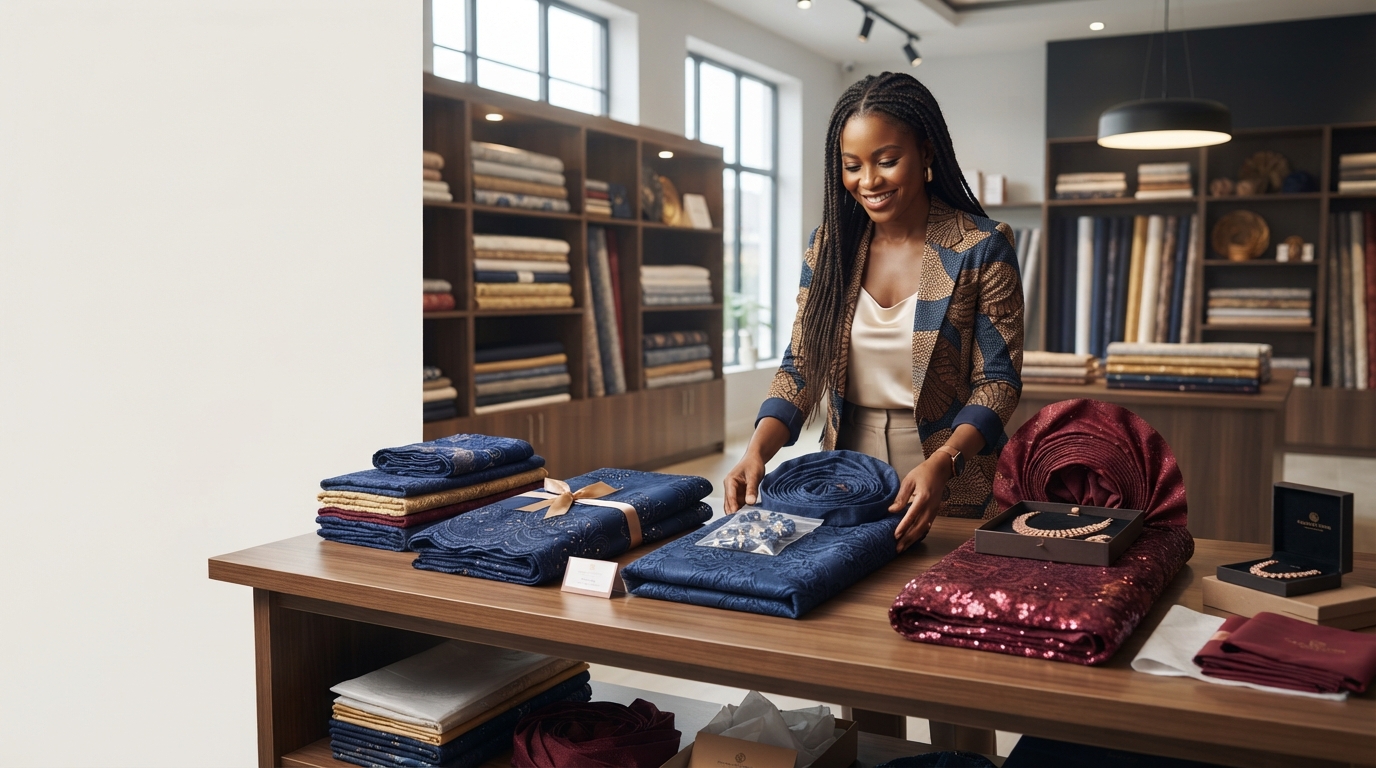
How to Create Asoebi Packages Customers Will Love | Guide
How to Create Asoebi Packages That Customers Will Actually Want to Buy
Introduction
Selling asoebi is not always as simple as putting a fabric on display and waiting for customers to buy it.
Customers are often looking for a complete solution.
Someone preparing for a wedding may need fabric, gele and other coordinated items. Another customer may only want the fabric. Someone else may be buying for a group and needs several sets at once.
This is where asoebi packages can become useful.
A well-designed package can make shopping easier for customers, help them understand what they are paying for and give your business more opportunities to increase the value of each order.
But there is a catch.
Not every package will appeal to customers.
A package that contains too many things can feel unnecessarily expensive. A package that contains too little may not seem useful. And if the pricing is confusing, customers may simply decide not to bother.
The key is to create packages based on what customers actually need, how much they are willing to spend and how they prefer to shop.
Here is how to create asoebi packages that customers can understand and actually want to buy.
What Is an Asoebi Package?
An asoebi package is a combination of products offered together for a specific occasion, customer or budget.
Depending on your business, a package may include:
- Asoebi fabric
- Gele
- Complementary fabric
- Men’s fabric
- Matching accessories
- Other event-related items
You don’t necessarily need to include all of these.
A good package is simply one that makes sense for the customer.
For example, instead of selling a fabric alone, you may offer:
Fabric only
Fabric + gele
Premium fabric + gele
This gives customers choices without forcing everyone into the same package.
1. Start With the Customer’s Actual Need
The first question should be:
“What is this customer trying to buy?”
Some customers want only fabric.
Some want everything coordinated.
Some are buying for themselves.
Others are buying for a group.
Some are highly budget-conscious.
Others are willing to spend more for a premium look.
This means one package cannot serve everybody.
Start by identifying the type of customer you are targeting.
2. Create Packages at Different Price Points
One of the easiest ways to make asoebi packages more appealing is to create different levels.
For example:
Basic Package
Designed for customers who want the essential fabric option without additional items.
Standard Package
Includes the fabric plus an additional item such as gele.
Premium Package
Designed for customers looking for more elaborate fabric or a more complete offering.
The exact prices will depend on your products, costs and target market.
The important thing is to give customers a choice.
A customer who cannot afford the premium package should still be able to find a suitable option.
3. Don’t Put Everything Into Every Package
More products do not automatically create more value.
Sometimes businesses add too many items because they believe a larger package will look more attractive.
The customer may see something very different:
“Why am I paying for all these things when I only need the fabric?”
Keep each package purposeful.
Every item should answer the question:
“Why does the customer need this?”
If an item does not add meaningful value, consider removing it.
4. Make the Difference Between Packages Obvious
Customers should be able to understand your packages quickly.
For example:
Package A — Fabric Only
Package B — Fabric + Gele
Package C — Premium Fabric + Gele
The names can be changed to match your brand, but the differences should be obvious.
Avoid making customers decode complicated descriptions just to understand what they are buying.
Simple packages are easier to sell.
5. Build Packages Around Occasions
Asoebi is strongly connected to events.
This means your packages can be organised around occasions such as:
- Weddings
- Traditional marriages
- Birthday celebrations
- Naming ceremonies
- Church events
- Family celebrations
- Religious celebrations
- Special social events
When a customer is shopping for a specific occasion, a package can make the purchasing decision easier because it is already positioned around the event.
Instead of asking:
“What fabric should I buy?”
the customer can think:
“Which wedding package suits me?”
That is a much simpler decision.
6. Consider the Group Buyer
Asoebi is often purchased by groups.
One person may be coordinating fabrics for several people attending an event.
This customer has different needs from someone purchasing one outfit.
For group orders, make your package information especially clear.
Communicate:
- Quantity
- Fabric type
- Included items
- Price
- Available colours
- Minimum order requirements
- Delivery or collection arrangements
The easier you make the information to understand, the easier it becomes for the organiser to communicate it to everyone else.
7. Make Your Packages Easy to Compare
Customers should not have to open five different messages to figure out which package offers better value.
Present your packages side by side where possible.
For example:
| Package | Includes | Price |
|---|---|---|
| Basic | Fabric | ₦XX,XXX |
| Standard | Fabric + Gele | ₦XX,XXX |
| Premium | Premium Fabric + Gele | ₦XX,XXX |
The exact figures should reflect your actual pricing.
What matters is that the customer can immediately see the difference.
8. Make the Package Look Valuable
Perceived value matters.
A package can contain useful products and still feel unattractive if it is poorly presented.
Use good product photography.
Show:
- The fabric clearly
- Gele where included
- Close-up details
- Colour options
- The complete package together
For online customers, clear visuals help them understand what they are getting before they contact you.
9. Use Realistic Pricing
Your package price should make sense for both sides.
Before setting a price, calculate:
Cost of the fabric
- Cost of additional items
- Packaging
- Other relevant expenses
= Your actual package cost
Then determine your selling price based on your desired margin and the market you serve.
Avoid simply adding random amounts because a competitor is charging a certain price.
Your pricing should work for your business model.
10. Don’t Hide the Price
One of the biggest sources of customer frustration when shopping for asoebi is unclear pricing.
If a package is available at a specific price, communicate it clearly where appropriate.
For example:
Wedding Asoebi Package — ₦XXX,XXX
Includes: 5 yards fabric + 1 gele
This is much easier to understand than:
“Beautiful premium package available. DM for details.”
The clearer the information, the fewer basic questions customers need to ask.
11. Give Customers a Reason to Choose a Package
Why should a customer buy the package instead of buying each item separately?
Your answer could be:
- Convenience
- Coordinated products
- Simpler shopping
- Special package pricing
- One-time purchase
- Easier event planning
Make the benefit obvious.
For example:
“Everything you need for your asoebi look in one package.”
The message should focus on convenience and value, not pressure.
12. Use Your Popular Fabrics in Packages
Your best-selling fabrics can provide a strong foundation for package creation.
Look at the products customers already ask for.
If certain lace designs, colours or categories consistently receive attention, consider whether they can be incorporated into packages.
This reduces the risk of creating packages around products customers don’t want.
13. Create Limited Seasonal Packages
Your packages do not have to stay the same all year.
You can create packages around particular periods or occasions.
For example:
Eid Package
Christmas Asoebi Package
Wedding Season Package
Birthday Celebration Package
Seasonal packages give customers a reason to explore the collection again.
However, make sure the timing and stock support the promotion.
14. Offer Packages Without Removing Individual Options
Packages should create another buying option.
They should not necessarily replace your regular products.
Some customers will always want:
Fabric only.
Others will want:
Fabric + gele.
Others may want a more complete package.
Keeping individual products available while offering packages gives customers more flexibility.
15. Make the Package Easy to Share
Think about the person who is organising an event.
They may need to send your package information to dozens of people.
Your package should therefore be easy to forward on WhatsApp.
A good package graphic or message should clearly show:
Name
Fabric
What’s included
Price
Colour options
How to order
The organiser should not need to rewrite the entire offer before sharing it.
16. Use WhatsApp to Promote Asoebi Packages
WhatsApp is particularly useful for asoebi sales because customers can easily send product photos and package details to friends and family.
You can use:
WhatsApp Status
Broadcast messages
Customer groups
Direct follow-ups
Product catalogue
Make your content visual and easy to understand.
Instead of posting only:
“Asoebi available. DM.”
show the entire package and explain what customers receive.
17. Create a Sense of Choice, Not Confusion
Three well-designed packages may be more effective than ten complicated ones.
When customers have too many options, they can become overwhelmed.
Start with a small number of clear packages.
You can always expand them based on customer feedback.
The goal is not to prove that you have many options.
The goal is to help the customer choose confidently.
18. Listen to What Customers Say About Your Packages
A package is not finished simply because you have created it.
Monitor customer reactions.
Ask:
Which package gets the most enquiries?
Which one converts to sales?
Which items do customers remove?
Which items do they ask you to add?
Which price range receives the most interest?
This information can help you improve the next version.
Common Asoebi Packaging Mistakes
Making Packages Too Expensive
Adding too many extras can push the total price beyond what your target customer wants to spend.
Making Packages Too Complicated
Customers should understand the offer quickly.
Hiding Important Information
Price, quantity and included items should be clear.
Including Items Customers Don’t Need
Every item should add value.
Creating Packages Without Checking Stock
You don’t want to advertise a package and then discover that you cannot fulfil it.
Ignoring Different Budgets
A single premium package may exclude a large part of your potential market.
A Simple Formula for Creating an Asoebi Package
Before creating a package, answer these five questions:
Who is it for?
What occasion is it for?
What does the customer actually need?
How much are they likely to spend?
What makes the package easier or better than buying separately?
Your answers should determine the final package.
Example of a Simple Asoebi Package Structure
A fabric business could structure its offers like this:
Package 1 — Essential
Fabric only.
For customers who already have their accessories or want to keep the purchase simple.
Package 2 — Complete
Fabric + gele.
For customers who want two key items coordinated together.
Package 3 — Premium
Premium fabric + gele + additional coordinated item where appropriate.
For customers looking for a more complete event look.
These are only examples. Your actual package structure should reflect your products, customer demand and pricing.
Final Thoughts
Asoebi packages work best when they make the customer’s shopping experience simpler, clearer and more convenient.
Don’t create a package just because adding more products makes the offer look bigger.
Create it because it solves a real customer need.
Understand who you are selling to.
Offer different price points.
Keep the package simple.
Make the value clear.
Use fabrics customers already want.
Present the offer properly.
And listen to customer feedback so you can improve over time.
A good asoebi package should make the customer think:
“This is exactly what I need.”
At Subtle Fabrics, we understand that asoebi shopping is often about more than choosing a beautiful fabric. Customers want options that fit their event, style, budget and overall look.
Whether you are buying for yourself, coordinating a group or planning an event, a well-structured asoebi package can make the entire shopping process easier.
Sell the solution, not just the fabric.
Frequently Asked Questions
What is an asoebi package?
An asoebi package is a combination of products offered together for an event, customer or budget. It may include fabric, gele or other coordinated items depending on the seller’s offering.
How should I price an asoebi package?
Calculate the total cost of everything included, add relevant business expenses and then set a selling price that provides a reasonable margin while remaining suitable for your target market.
Should I offer different asoebi package prices?
Offering different price points can help serve customers with different budgets and give buyers more flexibility.
What should be included in an asoebi package?
There is no fixed formula. Include products that make sense for the customer and occasion. Fabric and gele are examples, but the contents should match what your customers actually need.
How many asoebi packages should I create?
Start with a small number of clear options. Too many packages can make the decision harder for customers.
Can asoebi packages help increase sales?
Packages can make shopping more convenient and may increase the value of an order when the included products genuinely meet the customer’s needs.
How can I promote asoebi packages online?
Use clear images and videos through your website, WhatsApp, Instagram and other channels. Show exactly what is included, the price, available options and how customers can order.


