

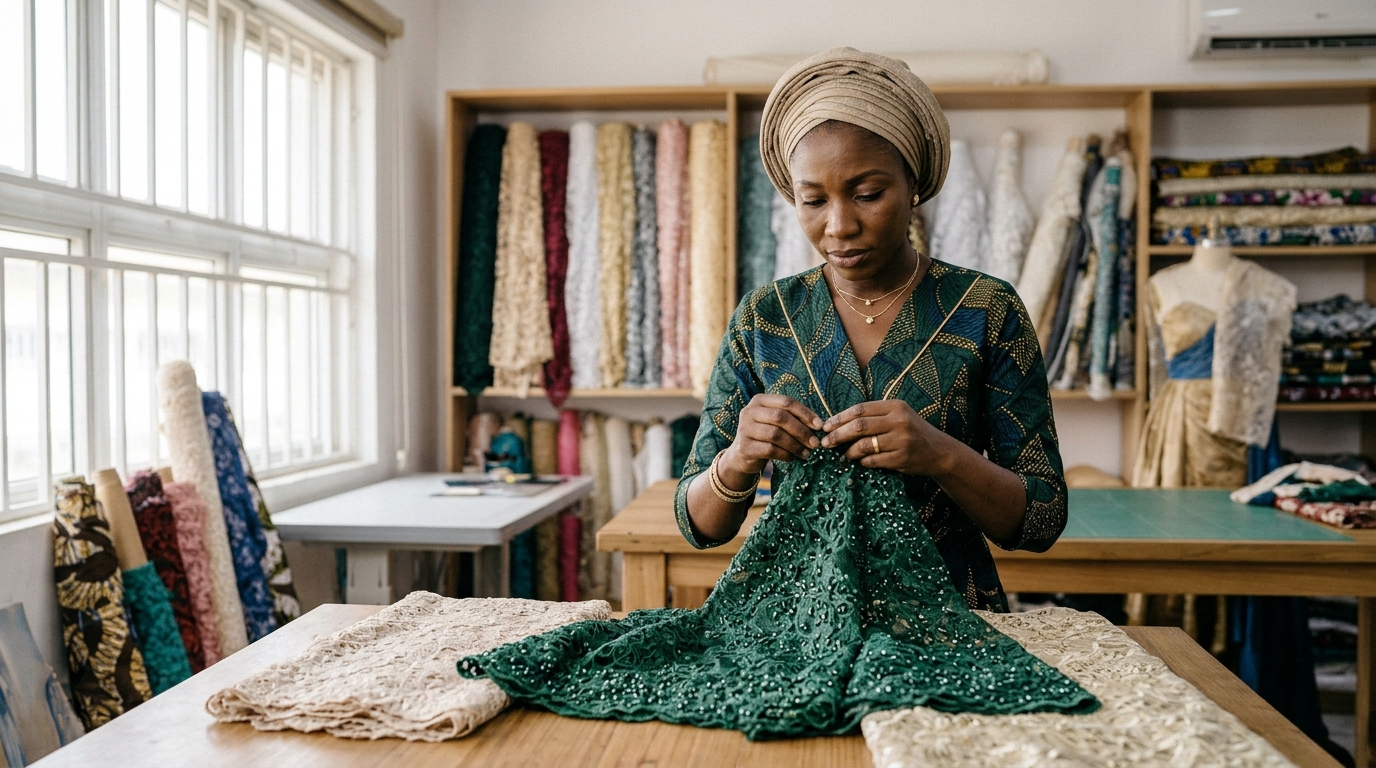
How to Identify Good Quality Lace Fabric Before Buying
How to Identify Good Quality Lace Fabric Before Buying: 8 Things to Check
Have you ever seen a beautiful lace fabric, fallen in love with the design and immediately wanted to buy it, only to start wondering whether the quality is actually worth the price?
It happens.
When shopping for asoebi, the design and colour often catch your attention first. But there is much more to a good lace fabric than how beautiful it looks on display.
Two lace materials can have similar patterns but differ in their texture, embroidery, finishing, durability and overall quality.
So, how do you know whether the lace you are about to purchase is a good choice?
Before paying for that beautiful material, here are eight things you should check.
1. Examine the Embroidery and Design Details
Start by looking closely at the embroidery.
On embroidered lace, the patterns should generally appear well-defined, with neat stitching and a consistent finish.
Check whether the decorative details look properly secured. Loose threads, poorly finished sections and uneven embroidery may be signs that the material needs closer inspection.
However, remember that different lace varieties have different finishes. A delicate lace may naturally have a lighter appearance than a heavily embroidered one.
The important thing is to understand what type of lace you are buying and whether its finishing is appropriate for that material.
2. Feel the Texture of the Fabric
Your hands can tell you quite a lot about a fabric.
Feel the lace gently and pay attention to its texture. Is it soft, firm, delicate, rough or heavily textured?
There is no single texture that automatically means a lace is good quality. Chantilly lace, cord lace and beaded lace are designed to have different characteristics.
What matters is whether the texture is consistent with the type of fabric and the purpose for which you intend to use it.
If you want a flowing outfit, for example, you may prefer a lace that drapes well rather than one that is excessively stiff.
3. Check the Back of the Fabric
This is one step many buyers overlook.
Do not examine only the front of the lace. Turn it over and inspect the reverse side too.
Look out for:
- Excessively loose or messy threads.
- Poorly finished embroidery.
- Unsecured embellishments.
- Irregular stitching.
- Areas that appear unusually weak or damaged.
Some decorative fabrics naturally have visible threads or backing materials on the reverse side, so do not assume every visible thread means poor quality.
Instead, look at the overall workmanship and whether the fabric appears properly finished.
4. Inspect the Beads, Sequins and Other Embellishments
If you are buying beaded lace or sequin lace, the embellishments deserve special attention.
Check whether the beads and sequins are securely attached. Gently move the material and observe whether decorative pieces fall off easily.
Also look for:
- Missing beads or sequins.
- Unevenly distributed embellishments.
- Rough or sharp decorative edges.
- Areas with noticeably poor finishing.
A heavily embellished lace can be beautiful, but the quality of its decorative work matters just as much as its appearance.
5. Check the Fabric’s Width and Usable Area
Fabric width is important when planning an outfit.
Two lace materials may be sold at the same price per yard but have different widths. This can affect how much material your tailor needs.
Also, check whether the decorative pattern runs across the full width of the fabric or whether some areas have plain borders or sections that may affect cutting.
Before purchasing, ask the seller for the fabric’s width and confirm the quantity required for your preferred design with your tailor.
This helps you avoid buying too little or spending unnecessarily on extra yards.
6. Look at the Colour and Pattern Consistency
When buying lace, pay attention to the consistency of the colour and design.
Check whether the fabric has noticeable colour variations, uneven dyeing, unexpected marks or damaged sections.
If you are buying multiple yards, inspect the material to make sure the pieces are consistent.
For asoebi groups buying fabric for several people, this is particularly important because everyone wants a coordinated appearance in photographs.
If possible, inspect the fabric under natural lighting as well as indoor lighting. Some shades can look different depending on the light source.
7. Consider the Fabric’s Weight and Drape
A fabric’s weight can influence how an outfit looks and feels when worn.
Some lace materials are lightweight and delicate, while others are heavier because of their embroidery, backing or embellishments.
Neither is automatically better. The right choice depends on the outfit you intend to make.
For example:
- A flowing gown may benefit from lace with a suitable drape.
- A structured corset design may require additional support and lining.
- A heavily embellished gown may need a strong construction to support its weight.
- A delicate overlay may require a suitable base fabric underneath.
Always consider the design before choosing the material.
8. Ask Questions About the Fabric Before Buying
Never feel uncomfortable asking questions when purchasing fabric.
A good buying experience should leave you confident about what you are paying for.
Ask the seller:
- What type of lace is this?
- How wide is the fabric?
- Is it heavily embellished?
- Does it require special handling?
- Is the design available in other colours?
- How many yards are available?
- What care instructions should I follow?
You can also ask about the fabric’s composition where that information is available.
The more you understand about your purchase, the easier it becomes to make an informed decision.
Bonus: How to Choose the Right Lace for Your Outfit
Good quality lace is important, but the most expensive fabric is not automatically the best choice for every design.
Before making your final decision, consider the following:
For corset gowns: Look for lace that works well with the structure and support your tailor intends to use.
For flowing gowns: Consider the fabric’s weight and drape.
For traditional iro and buba: Choose a lace whose pattern and texture complement the style you want.
For heavily embellished outfits: Pay attention to the weight, finishing and security of the decorative details.
And most importantly, involve your tailor before purchasing if you are unsure whether a particular fabric will work for your preferred design.
Final Thoughts
Choosing good quality lace fabric requires more than falling in love with a beautiful pattern.
You need to pay attention to the embroidery, texture, finishing, embellishments, width and overall suitability for your desired outfit.
Taking a few extra minutes to inspect your fabric before purchasing can help you make a more confident decision and avoid unnecessary surprises when it is time to sew.
At Subtle Fabrics, we believe that choosing the right fabric is the beginning of a beautiful outfit.
Explore our collection of lace fabrics and find something that matches your taste, occasion and budget.
Subtle Fabrics — Style Beyond Fabrics.


