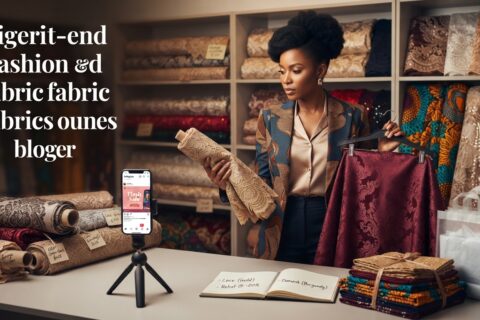
How to Spot Fabric Trends Before Buying Stock | Fabric Business Guide
How to Spot Fabric Trends Before You Buy Stock: A Guide for Nigerian Fabric Sellers
Running a fabric business is not just about finding beautiful fabrics. One of the biggest skills a fabric seller can develop is knowing which fabrics customers are likely to want before investing money in stock.
A fabric can be beautiful and still sit on your shelf for months. Another can suddenly become the fabric everybody is asking for, leaving sellers scrambling to restock.
The difference often comes down to one thing: being able to identify a real fabric trend before buying heavily into it.
For Nigerian fabric businesses, this is especially important because customer preferences can change quickly around weddings, festive seasons, religious celebrations, fashion events, celebrity styles and social media trends.
So how do you know whether a fabric trend is worth your money or simply another passing hype?
What Is a Fabric Trend?
A fabric trend is a noticeable increase in interest in a particular type of fabric, colour, texture, pattern, embellishment or style.
For example, customers may suddenly begin requesting:
- A particular lace texture
- Heavy or light embellishment
- Certain colours
- Sequined fabrics
- Cord lace
- Brocade
- Velvet
- Damask
- Certain asoebi styles
However, seeing a fabric become popular online does not automatically mean you should buy hundreds of yards.
The real question is:
“Is this trend strong enough to create actual demand from my customers?”
That is where proper trend spotting comes in.
1. Watch What People Are Wearing
One of the simplest ways to identify upcoming fabric trends is to pay attention to what people are actually wearing.
Look at weddings, parties, traditional ceremonies, church events, fashion shows and social gatherings.
Social media is also extremely useful. Instagram, TikTok and Pinterest can reveal repeated patterns in what people are wearing and posting.
Don’t just look at one viral outfit.
Instead, look for repetition.
If you keep seeing similar colours, textures, lace patterns or embellishments appearing across different people and events, that is a stronger indication of a growing trend.
2. Pay Attention to Customer Questions
Your customers are one of your best sources of market research.
Pay attention to questions such as:
“Do you have this type of lace?”
“Can I get this in wine?”
“Do you have something similar to what I saw online?”
“Which fabric is trending now?”
When several customers start asking for the same thing, take note.
Even when you don’t currently stock the fabric, those enquiries tell you something about what your market is beginning to look for.
Your WhatsApp messages, Instagram DMs, phone calls and in-store enquiries can become a very useful trend-tracking system.
3. Watch What Tailors and Fashion Designers Are Using
Fabric sellers should not only watch customers. Watch the people creating the clothes too.
Tailors and fashion designers often notice style changes before the average customer does.
A particular fabric may begin appearing repeatedly in their designs because it photographs well, drapes nicely or works particularly well with a new silhouette.
Building relationships with reliable designers can therefore give you valuable information about what customers may soon start requesting.
4. Look Beyond the Fabric Itself
Sometimes the trend is not actually the fabric.
It may be the:
- Colour
- Texture
- Embellishment
- Pattern
- Finish
- Weight
- Way the fabric is styled
For example, customers may not suddenly want an entirely new category of lace. They may simply be looking for a particular shade of lace or a certain type of embellishment.
Understanding this distinction can help you make smarter buying decisions.
Instead of asking, “Is lace trending?”, ask:
“Which type of lace, which colour and which finish are customers responding to?”
That question gives you much more useful information.
5. Check Social Media, But Don’t Let Social Media Make the Decision for You
Social media is excellent for discovering trends, but it can also be misleading.
A fabric may appear everywhere because one particular video has gone viral.
That does not necessarily mean thousands of Nigerian customers are ready to buy it.
Before investing heavily, compare what you’re seeing online with what is happening in your own market.
Ask yourself:
Are my customers asking for it?
Are designers using it?
Are competitors stocking it?
Is it suitable for upcoming occasions?
Can I sell it at a price my customers can afford?
The strongest buying decisions usually happen when online interest and real customer demand point in the same direction.
6. Study Your Competitors
You don’t need to copy your competitors, but you should know what is moving in the market.
Pay attention to fabrics they repeatedly promote, the colours they feature and the products that appear to receive strong engagement.
Also look at what appears to sell quickly.
There is an important difference between a fabric that gets plenty of likes and one that actually gets purchased.
Your goal is not simply to find what is popular.
Your goal is to identify what is commercially useful for your customer base.
7. Test Before You Buy Big
This is one of the most important rules for fabric sellers.
You do not always need to buy a huge quantity immediately.
Start with a smaller quantity where possible.
Take clear photos and videos.
Show the fabric to existing customers.
Post it on WhatsApp Status and social media.
Ask for feedback.
Monitor enquiries.
If customers respond strongly, you have better evidence to increase your order.
This approach reduces the risk of filling your store with fabrics that looked promising but failed to generate sales.
8. Consider the Season
Fabric trends are often connected to events and seasons.
Wedding season can influence asoebi demand.
Festive periods can influence colours and fabric choices.
Religious celebrations can affect what customers are looking for.
Even changes in weather and the types of clothes people want to wear can affect fabric demand.
Before buying new stock, ask:
What are my customers likely to be attending or celebrating over the next few weeks or months?
That question can help you buy with a purpose instead of buying simply because a fabric looks attractive.
9. Think About Your Customer’s Budget
A trend is not useful to your business if your customers cannot comfortably afford it.
A fabric may be extremely popular but positioned at a price far above what your target customers normally spend.
That is why successful fabric buying requires you to consider both demand and purchasing power.
Try to understand the different price levels within your market.
You can then stock a mixture of fabrics that appeal to different budgets rather than putting all your money into one expensive trend.
10. Look for Trends That Can Be Styled in Different Ways
A strong fabric trend usually gives customers options.
For example, fabrics that can work for weddings, birthdays, traditional events or coordinated family outfits may have broader selling potential than something suitable for only one very specific occasion.
Versatility can reduce your risk.
The more ways customers can imagine using a fabric, the easier it may be to sell.
11. Learn the Difference Between a Trend and a Fad
This is where many businesses lose money.
A trend usually has growing and sustained interest.
A fad can explode quickly and disappear just as quickly.
A simple way to assess a new fabric is to ask:
Has interest been growing consistently, or did it appear overnight?
Then keep monitoring it.
If interest continues across different customers, designers, events and platforms, the opportunity may be stronger.
If the fabric receives massive attention for a few days and then completely disappears, be more cautious about purchasing heavily.
12. Track What You Sell
Your own sales history can be more valuable than somebody else’s prediction.
Keep simple records of:
- Fabrics customers ask about
- Fabrics that sell quickly
- Colours that move fastest
- Fabrics that receive repeated enquiries
- Items customers reject
- Average customer spending
- Seasonal changes in demand
Over time, these records help you identify patterns specific to your own business.
That means your buying decisions become based on evidence rather than guesswork.
A Simple Fabric Trend Checklist
Before ordering a new trending fabric, ask yourself:
1. Are customers asking for it?
2. Are tailors or designers using it?
3. Am I seeing repeated demand rather than one viral post?
4. Does it fit the upcoming season or events?
5. Can my customers afford it?
6. Can I test it before buying a large quantity?
7. Does it fit the type of fabrics my business already sells?
The more “yes” answers you get, the stronger your case for stocking it.
Final Thoughts
Choosing fabrics for your business should never be based on beauty alone.
The best fabric sellers learn to combine fashion awareness, customer feedback, market research and sales data before committing their money to stock.
You don’t need to predict every trend perfectly.
You simply need to become good at spotting signals early, testing demand and knowing when to buy more.
That is how you stay relevant without allowing your shelves — or your money — to get stuck in yesterday’s trend.
At Subtle Fabrics, we understand that choosing the right fabric is about more than following fashion. It is about finding fabrics that make sense for your customers, their occasions and their budgets.