

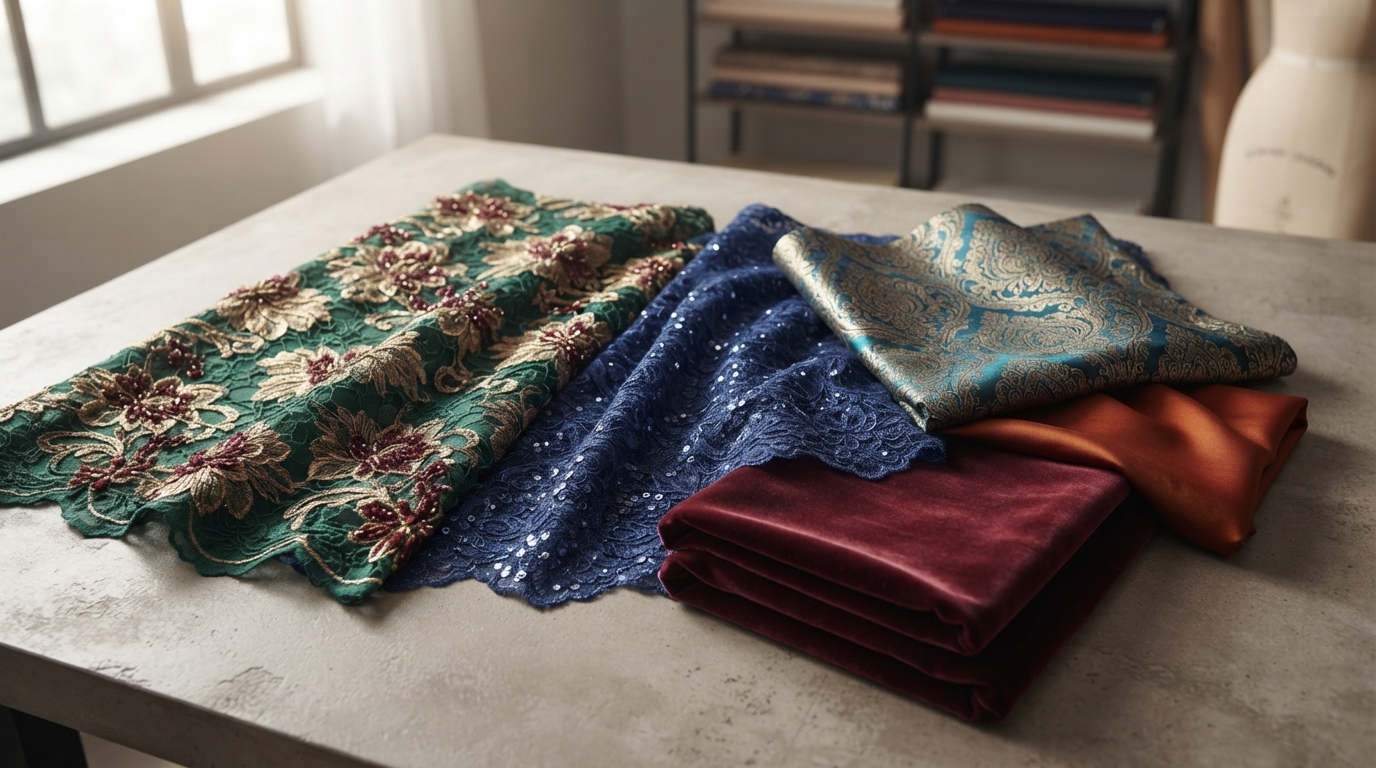
Why Do Some Fabrics Look More Luxurious Than Others?
Why Do Some Fabrics Look Richer Than Others, Even When They Have Similar Colours?
Have you ever seen two fabrics in the same colour, only to find that one looks simple while the other looks like it belongs at a high-profile wedding? They may both be wine, emerald green, champagne or royal blue, but somehow, one catches your attention immediately.
What makes the difference?
It is not always the price, and it is certainly not just the colour. Several factors influence how rich, elegant or luxurious a fabric looks, including its texture, surface finish, embroidery, pattern arrangement and how it reflects light.
Understanding these details can help you make better fabric choices for weddings, special occasions and everyday statement outfits.
1. Fabric Texture Can Change Everything
One of the first things that influences a fabric’s appearance is its texture.
Some fabrics have smooth, even surfaces, while others feature raised embroidery, intricate patterns, woven designs or decorative embellishments. These details create visual depth and make the fabric more interesting to look at.
For example, a plain wine-coloured fabric may look understated, while a wine cord lace with raised floral patterns can create a more elaborate appearance.
Neither option is automatically better. The difference lies in the look you want to achieve.
If you love outfits that make a statement, fabrics with dimensional textures, detailed embroidery or decorative patterns may appeal to you. If your style is more minimal, a smooth fabric with a beautiful finish may be exactly what you need.
2. The Way a Fabric Reflects Light Matters
Have you noticed how some fabrics catch the light when you move, while others maintain a softer, more subtle appearance?
That difference often comes from the fabric’s surface and finish.
Certain materials have a noticeable sheen that reflects light, while others have a matte finish that absorbs more light visually. Some embellished fabrics also sparkle because of sequins, beads or metallic threads.
For instance, velvet may create a rich-looking effect through its distinctive pile and changing appearance as light falls on it. A sequinned lace, on the other hand, can produce a more eye-catching effect through its reflective embellishments.
However, more shine does not automatically mean better quality. The goal is to choose a finish that suits your taste, outfit design and occasion.
3. Pattern Density Influences the Overall Look
Not all patterns create the same visual effect.
A fabric covered in closely arranged motifs can appear busy and elaborate, while one with widely spaced designs may look lighter and more understated.
The size of the motifs also matters. Large floral patterns can create a bold, dramatic appearance, whereas smaller, detailed motifs may produce a delicate and intricate effect.
Consider two lace fabrics in the same champagne colour. One features small, scattered patterns, while the other has dense floral embroidery and decorative detailing. Although their colours are similar, they can produce very different results when made into outfits.
When shopping for asoebi, look beyond the colour name. Examine the arrangement, scale and density of the design to determine whether it matches the look you have in mind.
4. Fabric Structure Affects How It Falls on the Body
A fabric can look beautiful when spread out on a table but appear completely different when sewn into an outfit.
Why? Because its structure affects how it drapes, holds its shape and responds to movement.
Some fabrics are soft and fluid, making them suitable for flowing silhouettes. Others have more body and can help create structured sleeves, fuller skirts, dramatic shoulders or defined shapes.
For example, a fabric with a suitable structure may help a fitted bodice maintain its shape, while a softer material may work better for a flowing gown.
This is why it is important to consider your intended outfit before buying fabric. A beautiful material is most effective when its characteristics work with your chosen design.
5. Embroidery and Embellishments Add Visual Detail
Embroidery, beads, sequins, appliqué and raised motifs can make a fabric visually striking.
These features introduce additional colours, textures, shadows and highlights to the surface. Depending on their placement and density, they can create anything from a subtle decorative effect to a dramatic statement.
This is one reason cord lace, beaded lace and sequinned lace can look so different, even when their base colours are similar.
However, embellishment alone does not determine quality. Pay attention to the neatness of the embroidery, the consistency of the pattern, the attachment of decorative elements and the overall finishing.
A well-chosen fabric should look attractive while also being suitable for the garment you intend to make.
6. The Quality of the Finish Makes a Difference
Two fabrics may have similar designs but differ in how neatly their patterns are formed, how consistent their surfaces appear and how well their details are finished.
When examining a fabric, look closely at the stitching or embroidery, the edges, the backing and the overall construction. Check whether decorative elements are securely attached and whether the material feels appropriate for its intended use.
Remember that appearance alone cannot confirm every aspect of quality. Fibre composition, durability, colourfastness and construction may require additional checks.
A higher price does not automatically guarantee a better fabric, just as a simple-looking fabric is not necessarily inferior. The best choice is one that meets your expectations for appearance, performance and budget.
7. Lighting and Photography Can Be Deceiving
Have you ever admired a fabric online, ordered it, and then noticed that it looked different when it arrived?
Lighting may be part of the reason.
Natural daylight, warm indoor bulbs, cool store lighting and camera flash can affect how colours and textures appear. A fabric with reflective threads or sequins may also look brighter in a photograph than it does in person.
Camera angles and image processing can further influence how a fabric’s details are presented.
Before making a purchase, especially online, consider asking for additional photographs or videos taken under different lighting conditions. A close-up can help you examine the texture, while a wider view shows the overall pattern.
At Subtle Fabrics, checking fabric details carefully can help you make a more informed choice for your next occasion.
8. Your Tailor and Outfit Design Complete the Picture
Even a beautiful fabric needs the right design to bring out its best features.
A heavily patterned lace may work beautifully with a relatively simple silhouette that allows the fabric to stand out. A fabric with a more understated design may offer room for dramatic sleeves, layered details or an elaborate neckline.
The key is balance.
Before cutting your fabric, discuss your preferred style with your tailor. Consider where the major motifs should appear, how the fabric will sit at the seams and whether the design requires additional lining or structural support.
These decisions can influence how the finished outfit looks and feels.
How to Choose a Rich-Looking Fabric Without Overspending
You do not have to choose the most expensive fabric in the shop to create a beautiful outfit. Instead, pay attention to the details that matter most to you.
Here are a few useful tips:
- Decide on your desired look: Choose between understated elegance, intricate detailing, noticeable shine or a bold statement.
- Examine the fabric closely: Look at the texture, pattern arrangement, finishing and embellishments.
- Check the drape: Think about whether the material will work with your intended outfit.
- Compare similar options: Fabrics in the same colour can differ significantly in appearance and construction.
- Consider your tailor’s advice: Some materials are better suited to particular styles than others.
- Stay within your budget: Choose a fabric that delivers the look you want without stretching your finances unnecessarily.
Most importantly, choose a fabric because it suits your style and occasion, not simply because it looks expensive.
Find a Fabric That Matches Your Style at Subtle Fabrics
Whether you love detailed cord lace, elegant brocade, embellished lace or other beautiful asoebi fabrics, the right choice starts with understanding what appeals to you.
At Subtle Fabrics, we cater to customers looking for fabrics for weddings, celebrations and other special occasions, with wholesale and retail options available.
Explore our collection at https://www.subtlefabrics.com or contact us on 09122739954 or 08035748779 for enquiries.
Subtle Fabrics — Style Beyond Fabrics.
Frequently Asked Questions
What makes a fabric look luxurious?
Texture, surface finish, pattern density, embroidery, fabric structure and the way a material reflects light can all contribute to a luxurious appearance. No single feature guarantees quality.
Does a shiny fabric always look more expensive?
No. Shine is a matter of finish and personal preference. Matte fabrics, textured lace and intricately embroidered materials can also create elegant looks.
Can an affordable fabric look elegant?
Absolutely. Choosing a suitable colour, attractive pattern, good finishing and an appropriate outfit design can help create a beautiful result without an extravagant budget.
Why does fabric look different in pictures?
Lighting, camera settings, screen displays, reflective embellishments and image processing can influence how a fabric appears. Requesting additional pictures or videos can help you assess it more accurately.
How can I tell whether a fabric is good quality?
Examine its construction, finishing, consistency and suitability for your intended garment. Depending on the material, you may also need to check its composition, durability and colourfastness.


