How Much Fabric Does a Man Need for Agbada, Senator and Kaftan?
How Much Fabric Does a Man Need for Agbada, Senator & Kaftan?
One of the most common questions when buying men’s fabric is surprisingly simple:
“How many yards do I need?”
You find the perfect Aso Ebi.
You know the colour.
You like the texture.
You’ve already imagined the outfit.
Then comes the important question:
How much fabric should I buy?
Unfortunately, there isn’t one universal answer.
A man making a Senator outfit may need a different amount from someone making an Agbada.
A tall man may require more fabric than a shorter man.
A fuller design may require more fabric than a simple one.
And your tailor may have specific requirements based on the style.
So before you buy that beautiful men’s Aso Ebi fabric, let’s break down what actually determines the quantity you need.
1. The Outfit You Want Matters Most
The first question isn’t:
“How many yards?”
It’s:
“What are you sewing?”
A Senator outfit, Agbada and Kaftan don’t use fabric in exactly the same way.
Senator
A Senator outfit generally has a more streamlined silhouette.
Because the design is usually less voluminous than an Agbada, the fabric requirement can be more manageable.
Kaftan
A traditional or modern kaftan can vary considerably depending on its length, width and design.
Agbada
Agbada is a completely different story.
The flowing outer layer requires considerably more fabric because of its generous volume and dramatic silhouette.
The bigger the Agbada, the more fabric planning matters.
2. Your Height Can Affect Fabric Quantity
Two men can wear the same style but require different amounts of fabric.
Why?
Because body measurements matter.
A taller man may need additional length.
Someone with a larger frame may also require more fabric.
This is why using another person’s fabric quantity as your exact measurement isn’t always reliable.
Your body is not a standard measurement.
3. The Design Can Change Everything
Suppose two men are both making Senator outfits.
One wants a simple design.
The other wants:
- Large embroidery
- Extra panels
- Long sleeves
- Decorative details
- A more elaborate neckline
Their fabric requirements may not be identical.
The more complicated the design, the more important it becomes to speak to your tailor before buying the fabric.
4. Agbada Usually Needs More Fabric
This deserves special attention.
Agbada is known for its flowing, oversized appearance.
That beautiful volume doesn’t come from nowhere.
It requires fabric.
The amount needed can depend on:
- The man’s height
- Body size
- Length of the Agbada
- Width of the design
- Number of layers
- Embroidery placement
- Whether trousers and inner pieces are made from the same fabric
So if you’re planning an Agbada, don’t simply buy the same quantity you would buy for a Senator.
5. Fabric Width Matters Too
This is something many shoppers don’t consider.
Two fabrics may both be described as a certain number of yards, but their usable width can differ.
That can affect how a tailor cuts the fabric.
So when you’re buying men’s fabric, don’t look at length alone.
Ask about the fabric specifications and let your tailor factor them into the calculation.
6. Patterns and Embroidery Can Affect Cutting
Some fabrics have large patterns or prominent embroidery.
That can influence how the tailor positions each section.
You may need extra fabric to ensure the design lines up correctly or that important motifs appear where you want them.
For example, if a fabric has an elaborate border, the tailor may need to plan the cutting around it.
That can affect how much fabric is required.
7. Don’t Forget the Inner Outfit
An Agbada isn’t usually just the outer robe.
There may also be:
- Inner top
- Trousers
- Buba
- Additional panels
If the same fabric is being used throughout the outfit, your total fabric requirement can increase.
This is another reason why asking:
“How many yards for Agbada?”
without specifying the complete outfit can produce an inaccurate answer.
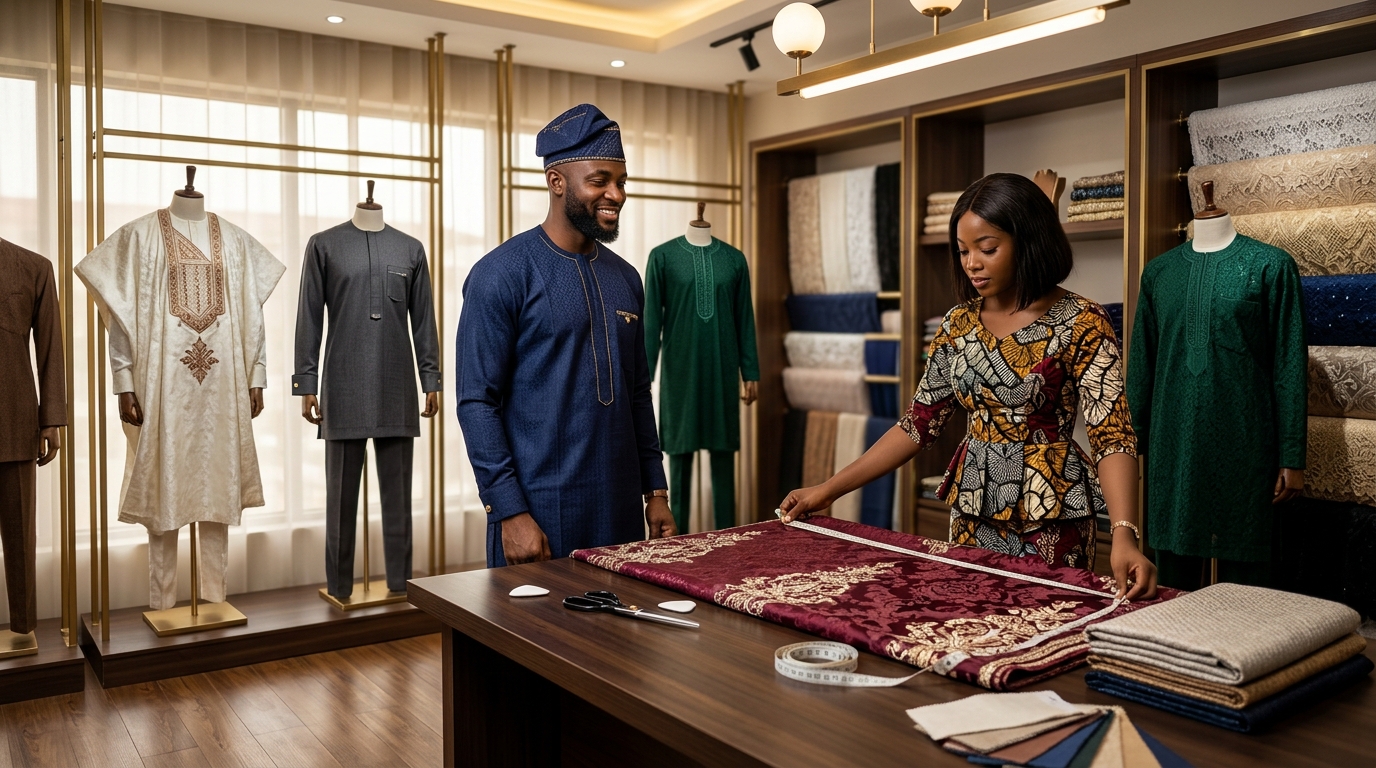
8. Your Tailor Should Have the Final Say
This is probably the most important advice in this article.
Don’t guess.
Don’t rely entirely on:
“My friend used six yards.”
Your friend isn’t you.
His outfit isn’t necessarily your outfit.
His tailor isn’t necessarily your tailor.
And the fabric may not even have the same width or design.
Instead, show your tailor the exact fabric and tell them the style you’re making.
Then ask:
“How much do I need?”
That’s the safest approach.
Approximate Fabric Planning
If you’re simply trying to understand the difference between the major men’s styles, think of it this way:
| Outfit | Fabric Requirement |
|---|---|
| Senator | Usually lower than Agbada |
| Kaftan | Depends heavily on length and design |
| Agbada | Usually requires considerably more |
| Elaborate Agbada | May require additional fabric |
These are general planning categories, not exact yardage recommendations.
Your tailor should determine the actual quantity based on your measurements and chosen design.
What Happens If You Buy Too Little?
This is the nightmare scenario.
You’ve found the perfect fabric.
You buy what you think is enough.
You take it to the tailor.
Then:
“Oga, this won’t be enough.”
Now you have a problem.
The fabric may be sold out.
The remaining stock may come from a different dye batch.
The colour may not match perfectly.
Or you may have to change your design.
That’s why it’s better to confirm your quantity before purchasing.
What About Buying Too Much?
Buying extra isn’t always a problem.
Having a little additional fabric can sometimes be useful, especially for complicated designs.
But buying significantly more than necessary can unnecessarily increase your cost.
The goal is not:
Buy as much as possible.
It’s:
Buy the right amount for the outfit you’re making.
Men’s Aso Ebi: Buy the Fabric Before or After Choosing Your Style?
Ideally, these decisions should happen together.
You don’t necessarily need to have the entire outfit designed before buying fabric.
But you should have a clear idea of:
Agbada?
Senator?
Kaftan?
Buba and trousers?
Then your tailor can help determine the quantity.
This can save you from expensive mistakes.
The Golden Rule for Buying Men’s Fabric
Here’s the easiest rule to remember:
Choose the style. Know your measurements. Show the fabric to your tailor. Then buy the quantity recommended for that specific outfit.
That approach is much safer than relying on random yardage recommendations.
Because when it comes to men’s fashion:
One size does not fit all.
At Subtle Fabrics, We Know the Fabric Is Only the Beginning
A beautiful piece of men’s Aso Ebi is only the starting point.
What happens next matters just as much.
The right quantity.
The right style.
The right tailor.
The right finishing.
When all four come together, the result can be a men’s traditional outfit that looks polished, confident and made specifically for the wearer.
So before you ask:
“How much fabric do I need?”
Start with a better question:
“What exactly am I making?”
Once you know that, the rest becomes much easier.
Frequently Asked Questions
How many yards does a man need for a Senator outfit?
There is no universal amount. The required quantity depends on the man’s measurements, fabric width and the specific Senator design. Your tailor should confirm the exact quantity.
How many yards does a man need for Agbada?
Agbada generally requires more fabric than a simpler Senator outfit because of its flowing outer layer. The exact quantity depends on measurements and design.
Does a man’s height affect how much fabric he needs?
Yes. Height, body size and the desired length of the outfit can all affect fabric requirements.
Should I ask my tailor before buying men’s Aso Ebi?
Yes. Showing your tailor the exact fabric and intended style before purchasing can help you avoid buying too little or unnecessarily too much.
Can the same fabric quantity work for two men?
Not necessarily. Fabric requirements can vary based on body measurements, outfit design, fabric width and tailoring preferences.