

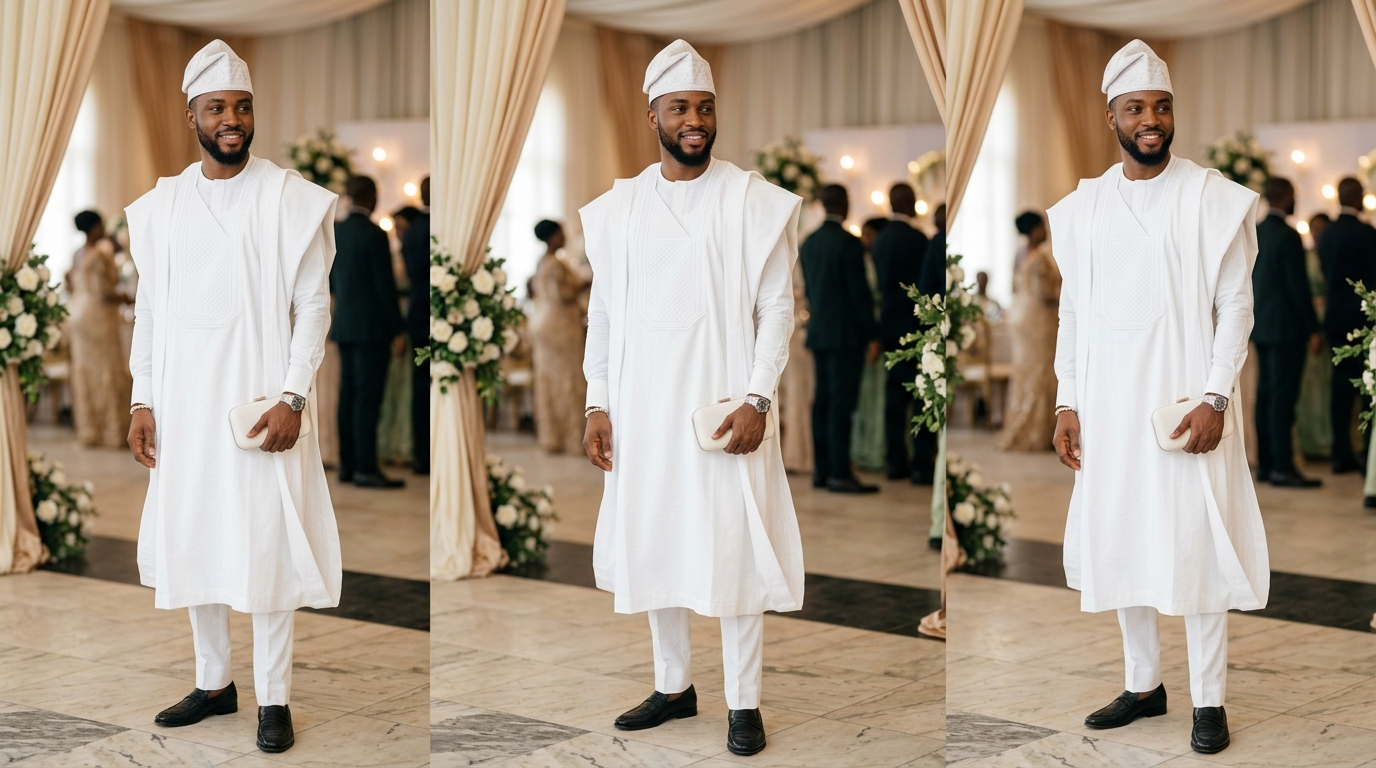
Why White Men’s Native Wear Is So Difficult to Get Right
Why White Men’s Native Wear Is So Difficult to Get Right
White native wear looks simple.
That is exactly why it is so difficult to get right.
A white Agbada, Senator or kaftan can look incredibly elegant when everything comes together. But because there is very little colour to distract the eye, every detail becomes visible—the fabric, the stitching, the embroidery, the fit, the lining and even how the outfit reacts to light.
There is a reason white remains a popular choice for weddings and formal occasions. White Agbada and other white native outfits are widely sold for Nigerian events, while premium white fabrics such as lace and linen-inspired options are also positioned for ceremonial menswear.
So what makes white men’s native wear so unforgiving?
Let’s break it down.
1. White Shows the Quality of the Fabric
With darker fabrics, small imperfections can disappear into the colour.
White doesn’t give you that luxury.
A low-quality or poorly finished white fabric can reveal:
- Uneven texture
- Loose fibres
- Poor finishing
- Transparency
- Wrinkles
- Uneven colour
- Cheap-looking sheen
This is why fabric quality matters even more when you’re buying white.
The goal isn’t simply to find something that looks white on a fabric roll.
You want a fabric that still looks clean, rich and refined once it becomes a finished outfit.
2. The Wrong White Can Look Completely Different
Not every white is the same.
There is bright white, soft white, ivory, cream and off-white—and the difference can become very noticeable once you put the fabric beside your skin, shoes, embroidery or accessories.
This becomes particularly important when you’re wearing an outfit with several components.
Imagine a white Agbada where the outer layer is bright white but the inner outfit is cream.
It may sound like a small difference.
In photographs, it can look like two completely different fabrics.
Always consider the undertone and shade of white as well as the fabric itself.
3. White Makes Fit More Important
A dark outfit can sometimes hide awkward folds or poor proportions.
White tends to emphasise them.
That means your tailor needs to get the proportions right.
Pay attention to:
Shoulders.
Sleeves.
Length.
Trousers.
Neckline.
Agbada volume.
Overall silhouette.
An expensive white fabric with poor tailoring can still look disappointing.
On the other hand, a well-tailored white outfit can look remarkably luxurious even when the design itself is simple.
4. Transparency Can Ruin the Look
This is one of the biggest things buyers should consider before purchasing white fabric.
Some lightweight or open fabrics may require an appropriate inner layer or lining depending on the finished garment.
This is especially important when you’re considering fabrics with open structures or intricate lace patterns.
The fact that a fabric looks beautiful on a display table doesn’t necessarily mean it can be worn exactly the same way.
Ask:
Will it be opaque enough for the outfit I want?
Does it need lining?
What colour should the inner layer be?
Will the lining change how the white looks?
These questions should be answered before cutting the fabric.
5. Embroidery Has Nowhere to Hide
White is the perfect background for embroidery—but it also makes poor embroidery easier to notice.
The wrong thread colour, uneven stitching or excessive detailing can completely change the appearance of the outfit.
For a sophisticated white native outfit, consider keeping the embroidery intentional.
You could use:
- White-on-white embroidery
- Silver detailing
- Soft gold
- Subtle grey
- A carefully selected contrasting thread
The objective is not to cover the outfit with embroidery.
It’s to make the embroidery support the fabric.
6. White Reflects Light Differently
This is one of the biggest reasons a white outfit can look amazing in one photograph and ordinary in another.
White reflects a lot of light.
Under direct sunlight, studio lighting, indoor lighting and camera flash, the same fabric can appear noticeably different.
The texture can become more obvious, and a fabric with too much sheen may look very different on camera.
For wedding photography, this matters.
Your outfit may be photographed in:
- Outdoor sunlight
- Reception lighting
- Flash photography
- Phone cameras
- Professional cameras
A good white fabric should still look sophisticated across different lighting conditions.
7. Your Accessories Become More Important
When the outfit is predominantly white, your accessories have more influence on the final appearance.
Your cap, shoes, watch and embroidery suddenly become part of the overall visual balance.
For example, a white Agbada can be paired with:
- A white or off-white traditional cap
- Brown leather shoes
- Black leather shoes
- Minimal jewellery
- Subtle metallic accessories
You don’t need to make every accessory dramatic.
The white fabric already provides a strong foundation.
8. White Requires More Maintenance
This one is obvious—but easy to underestimate.
White shows dirt.
It can also reveal sweat, stains, dust and poor storage more quickly than darker colours.
So before choosing a white traditional outfit, consider how and where you plan to wear it.
A white outfit for an indoor formal occasion is a different proposition from one you’ll wear repeatedly to outdoor events.
And after the event, proper cleaning and storage matter.
Don’t treat premium white fabric like an ordinary piece of clothing.
9. The Fabric Must Match the Design
This is where many people go wrong.
They see a beautiful white fabric and immediately decide:
“This will make a great Agbada.”
Not necessarily.
The fabric needs to work with the design.
A structured fabric may be excellent for a clean Senator silhouette.
A lighter fabric may create a different type of movement in an Agbada.
An intricate lace may need a carefully planned inner layer.
A fabric’s:
- Weight
- Drape
- Texture
- Opacity
- Pattern
- Finish
all affect how it behaves once tailored.
So don’t choose your white fabric separately from the outfit you have in mind.
10. Your Body Shape Matters Too
White naturally attracts attention.
That doesn’t mean you should avoid it because of your body shape.
It simply means the silhouette should be intentional.
The right tailor can use proportions, garment volume and design details to create balance.
For an Agbada, for example, the way the garment falls from the shoulders can dramatically affect the final appearance.
For a Senator, the cut and fit can determine whether the outfit looks sharp or sloppy.
The fabric is only part of the equation.
How to Choose the Right White Fabric for a Man’s Native Outfit
Before buying, don’t just ask:
“Is it white?”
Ask these questions instead:
Is the shade right?
Bright white, ivory and off-white will not create exactly the same appearance.
Is the fabric opaque enough?
Especially important for lighter or open fabrics.
How does it feel?
Texture matters.
How does it fall?
This can tell you a lot about how it will behave in a Senator or Agbada.
Does it work with your design?
A fabric that looks beautiful on the roll may not suit the style you want.
Will you need lining?
Know this before your tailor starts cutting.
How will it photograph?
Consider the occasion and lighting.
Is the quality worth the price?
Don’t judge quality by price alone.
White Agbada, Senator or Kaftan: Which Works Best?
There isn’t one correct answer.
White Agbada
The most dramatic option.
A well-made white Agbada can create a commanding, ceremonial look and works especially well for major celebrations.
White Senator
More structured and understated.
This is excellent for men who want a polished traditional appearance without the additional volume of an Agbada.
White Kaftan
A good choice when you want something relaxed while still looking sophisticated.
The fabric selection becomes particularly important because the simplicity of the silhouette puts more attention on the material itself.
The Most Important Rule: Don’t Buy White Fabric by Colour Alone
This may be the biggest lesson from everything we’ve covered.
Two fabrics can both be described as white, yet produce completely different finished outfits.
One may look soft and luxurious.
Another may look overly shiny.
One may photograph beautifully.
Another may expose every crease.
One may fall beautifully in an Agbada.
Another may work better in a structured Senator.
The fabric’s behaviour matters just as much as its colour.
Find the Right White Fabric at Subtle Fabrics
At Subtle Fabrics, choosing fabric isn’t just about finding a colour you like.
For men’s traditional wear, the fabric has to make sense for the outfit you want to create.
Whether you’re looking for white lace, Atiku, Brocade, Damask, Velvet or another quality fabric, the right material can make the difference between an outfit that simply looks white and one that looks genuinely luxurious.
Before your next wedding, traditional ceremony or special occasion, take the time to choose your fabric properly.
Because with white, there is nowhere for a bad fabric to hide.
Ready to create your next white native look?
Explore the men’s fabric collection at Subtle Fabrics and choose a fabric that gives your tailor something beautiful to work with.


